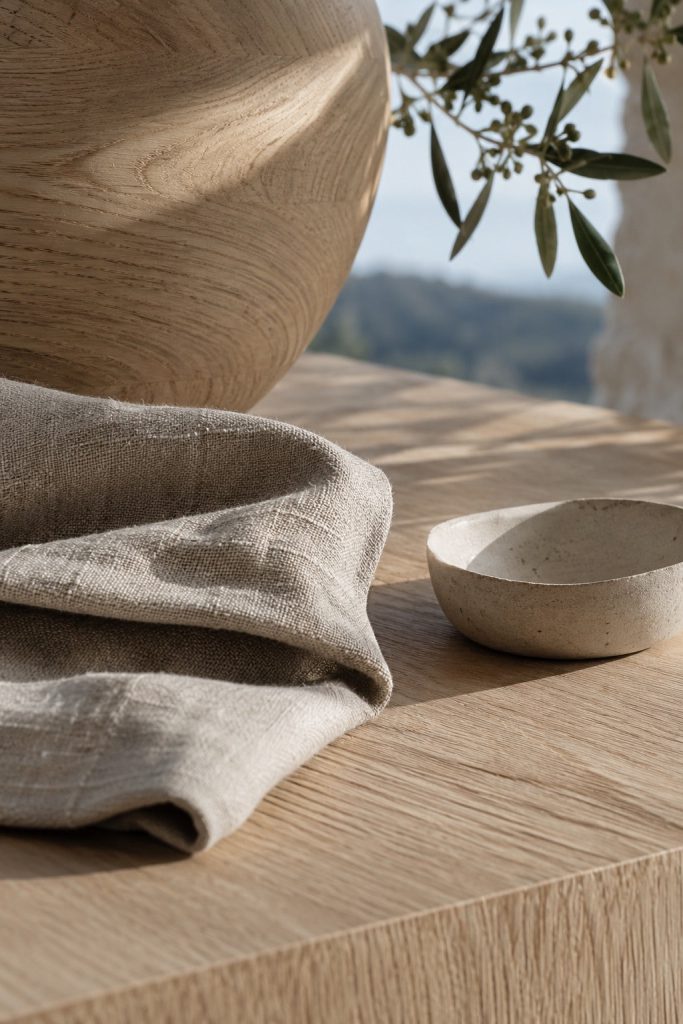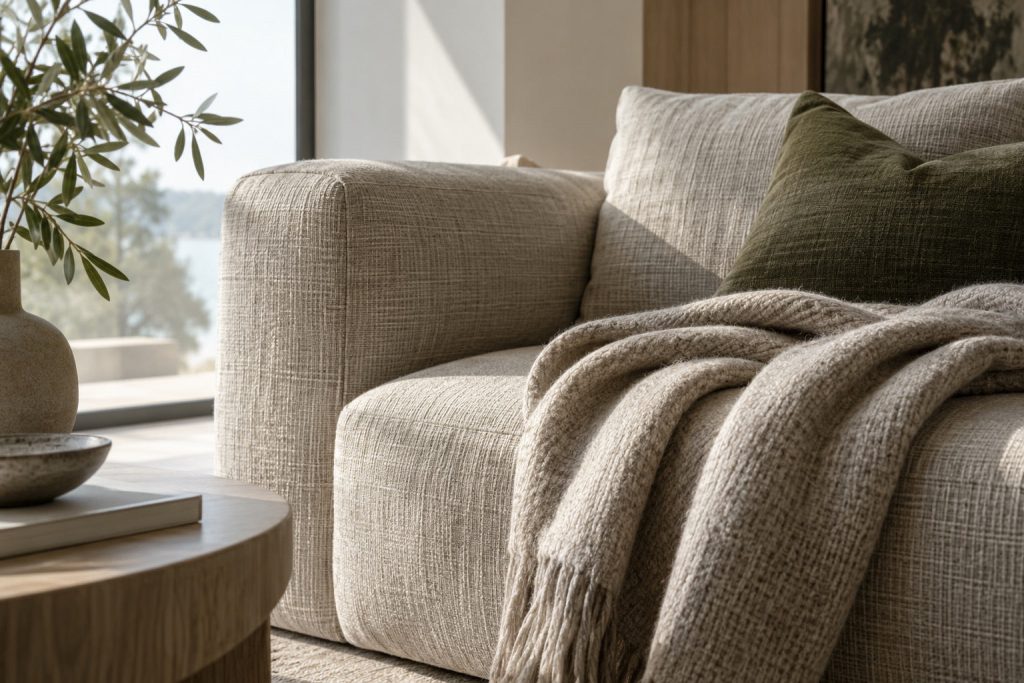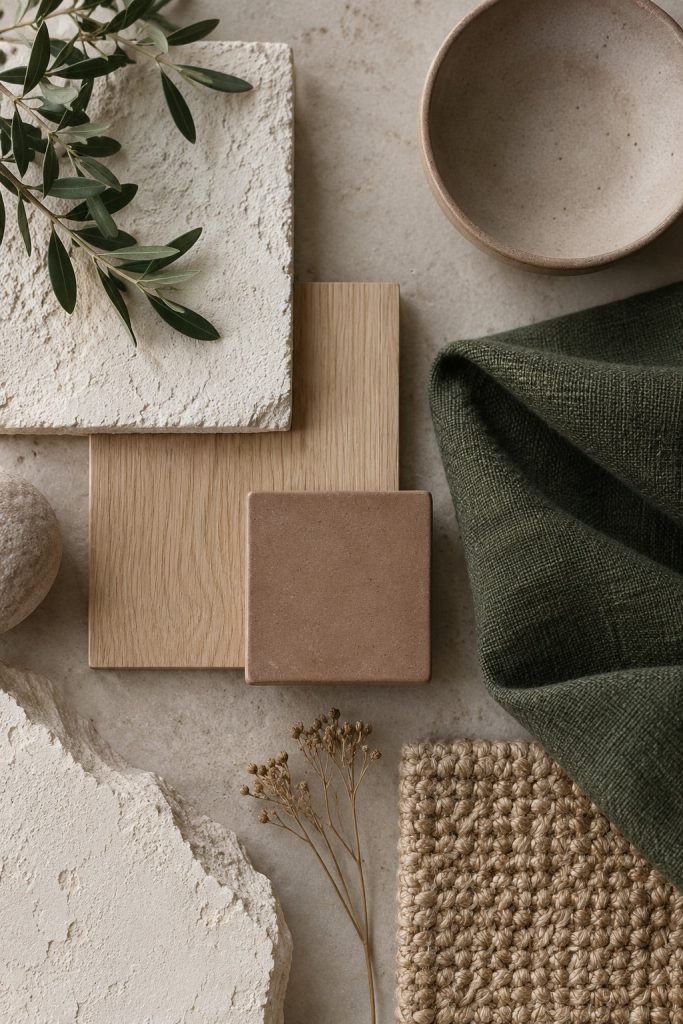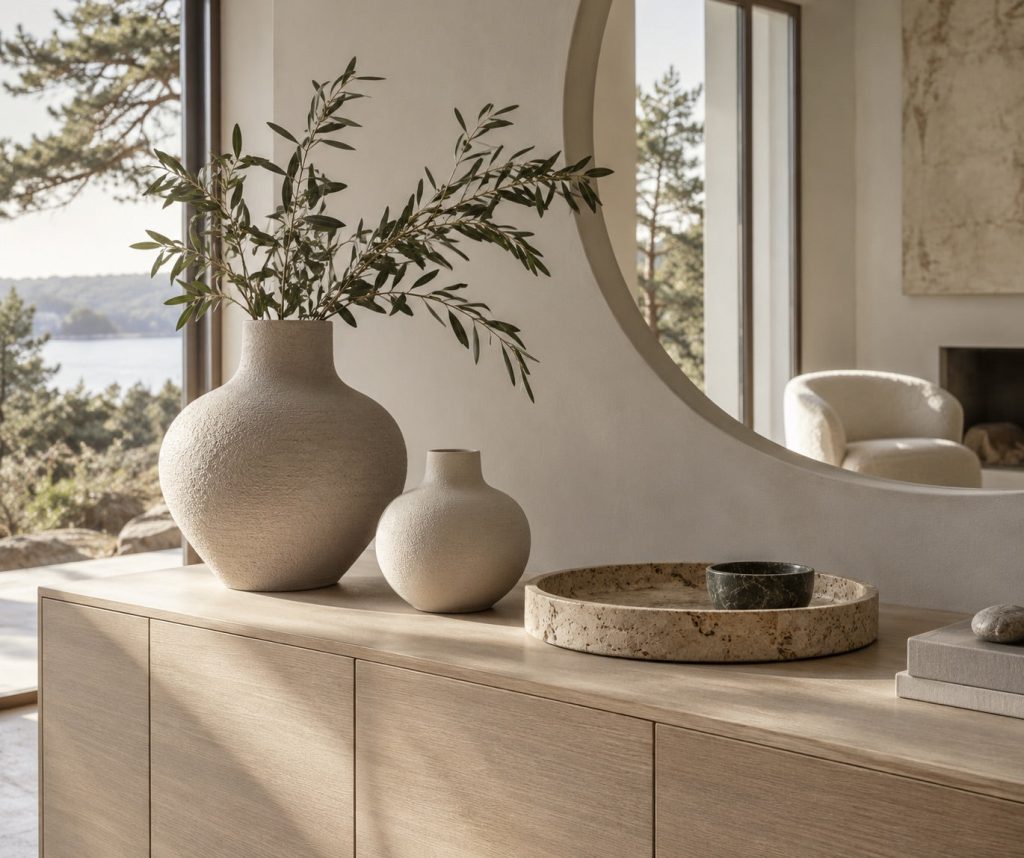
A room with several materials can still feel calm when each surface has a clear role. Wood, stone and ceramic offer different visual weights and textures. Rather than matching them exactly, look for a relationship between their tones and the shapes they create.
Choose a leading material
Let one material occupy the largest area and use the others in smaller amounts. A wooden table might be the starting point, with a ceramic vessel and a stone dish providing quieter contrasts. When every material competes for equal attention, the arrangement can feel busy even if the colors are neutral. Changing the proportions often helps more than removing all contrast.
Compare the finishes
Matte and polished surfaces respond differently to light. Place pieces together where they will actually be used and look from more than one angle. A reflective object may become the strongest element even when it is small. If you want a softer composition, reduce the number of highly reflective surfaces rather than forcing every object into the same color.
Protect the useful surface
Check the base of decorative objects before placing them on furniture, and follow the furniture maker’s guidance for suitable protection. Natural stone and ceramic finishes vary; neither name guarantees a particular resistance to marks or moisture. Keep the arrangement practical enough that the table or console can still do its everyday job. Beauty and usefulness should share the same surface.
Editorial concept for the Formrest demo. The cover is an AI-generated illustration, not a photograph of a product for sale or a completed client project.