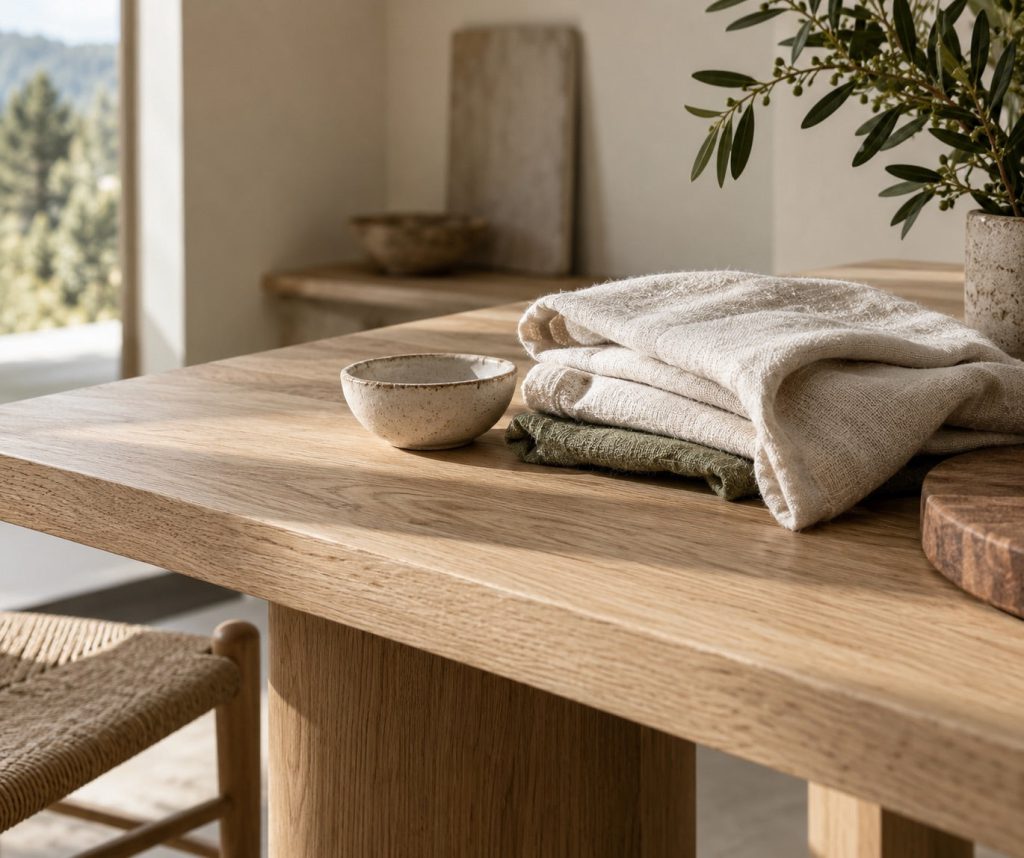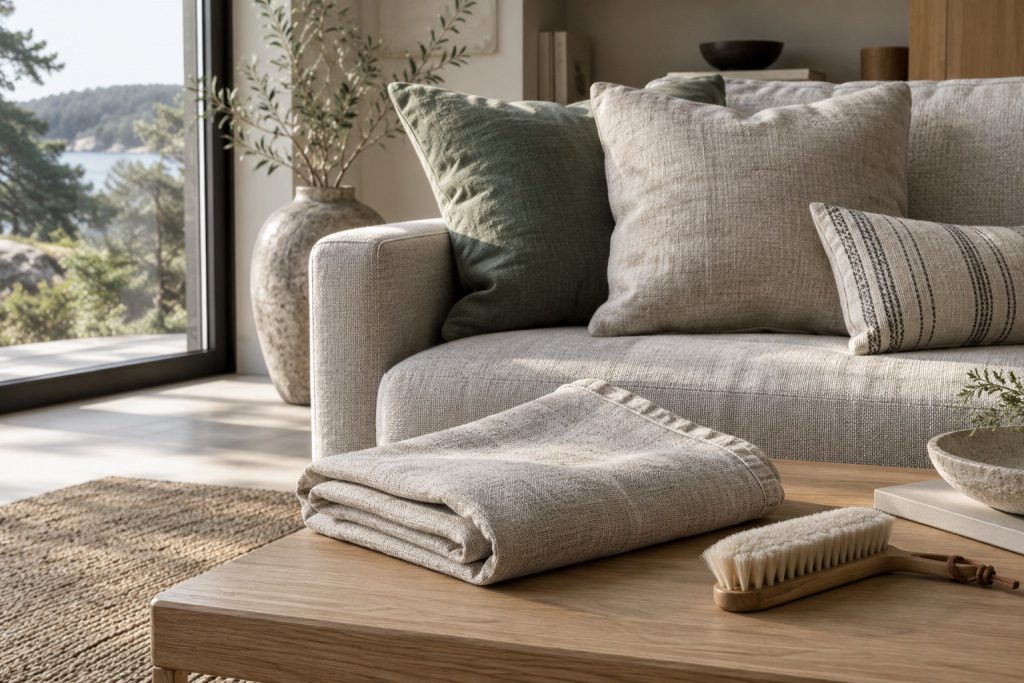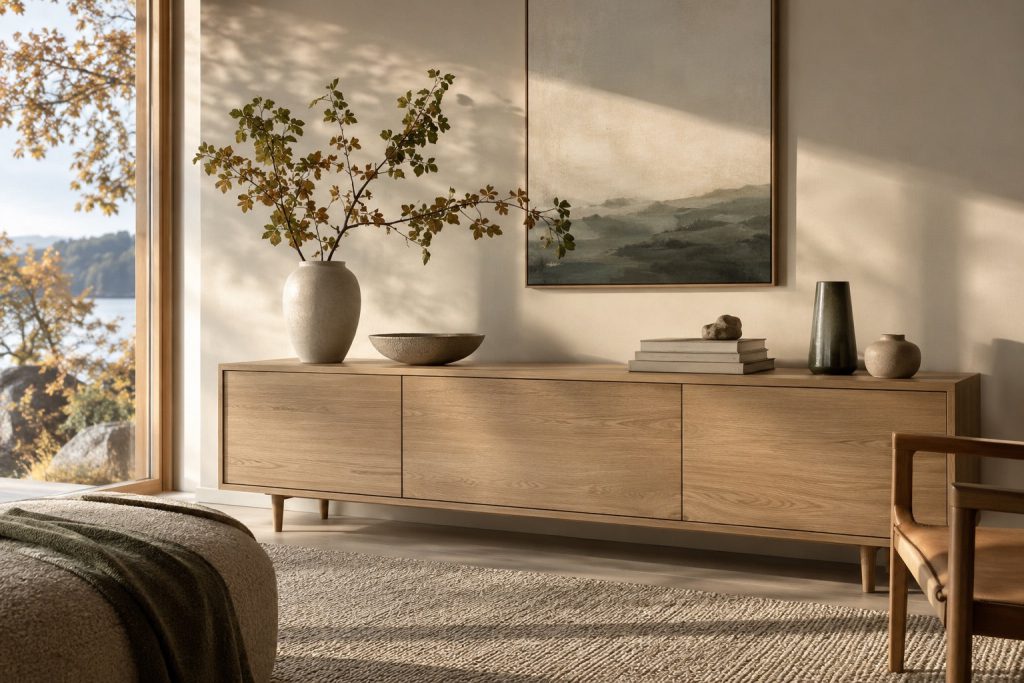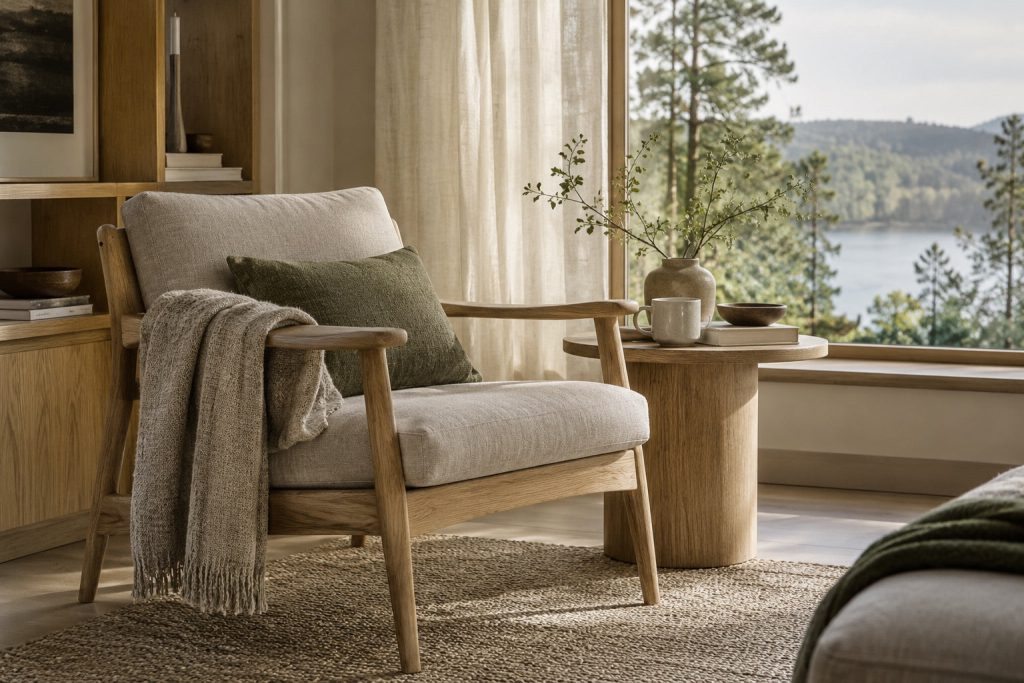
A thoughtful home is not measured by how little it contains. It is shaped by the relationship between the things in it and the people who use them. Keeping a well-loved piece can be as meaningful as choosing something new.
Notice what earns its place
Think about the chair people choose, the table used for several activities and the lamp that moves with the evening. These objects reveal your actual preferences. Let those observations guide future decisions. A piece does not need to be visually dramatic to matter; comfort, familiarity and usefulness can be reasons enough to keep it.
Ask useful questions before adding
Consider where a new item will go, what it will do and what care it will require. Ask for construction, finish and repair information when those details matter to you. Avoid treating a material name or a broad marketing phrase as proof of longevity. The decision becomes clearer when it relates to your household rather than an imagined perfect room.
Allow the room to develop
A home can remain unfinished in the best sense: open to changing routines and personal objects. Make space for the things you use now without discarding everything connected to an earlier stage of life. Repair or seek advice where appropriate, and move pieces when their roles change. A coherent room can grow gradually through attention rather than arriving all at once.
Editorial concept for the Formrest demo. The cover is an AI-generated illustration, not a photograph of a product for sale or a completed client project.