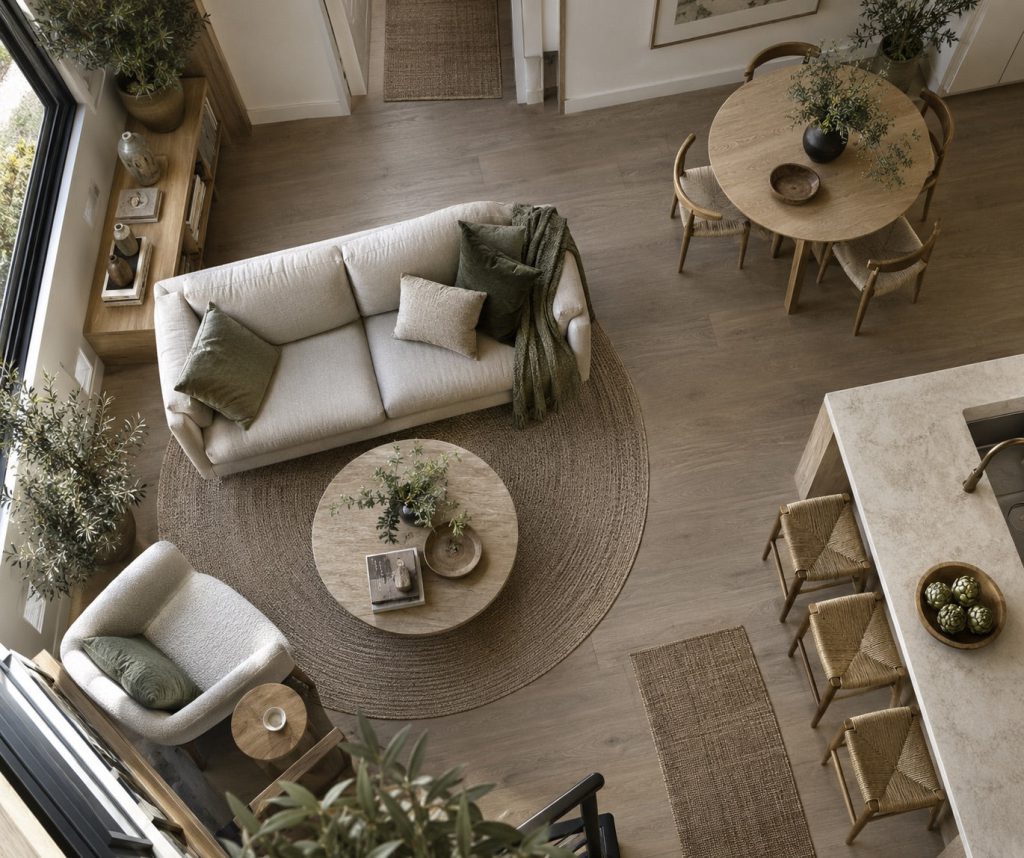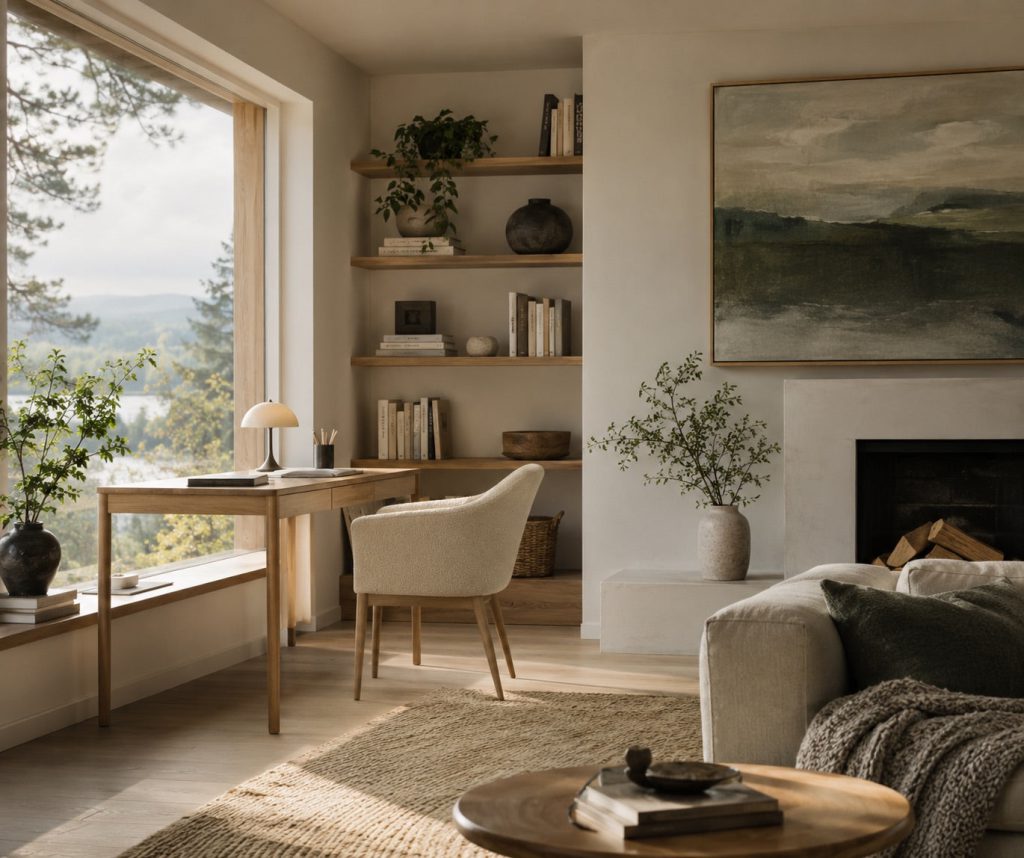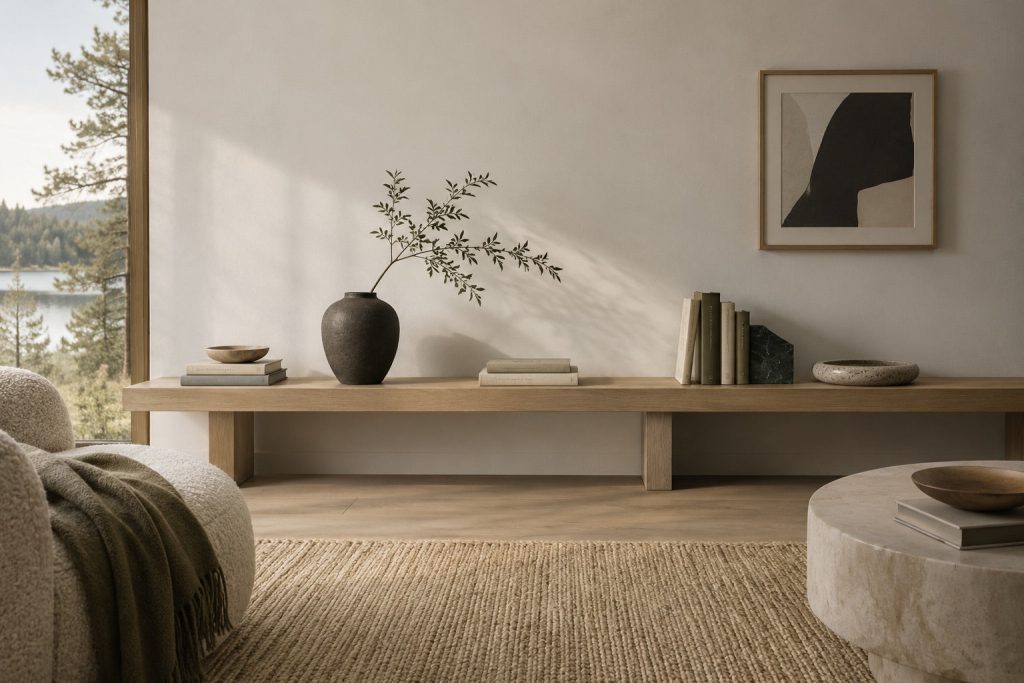
A shelf can hold useful things and still have a clear visual rhythm. Begin with what needs to live there, then find a pattern in its height, weight and spacing. Empty space is part of that pattern, not evidence that the shelf is unfinished.
Group by use first
Keep books and objects you reach for together. A display that requires moving several decorative pieces to retrieve one item will become frustrating. Place frequent items where they are easy to access, and respect the shelf’s stated load and installation requirements. Styling should work within the storage function rather than disguising a shelf that is difficult to use.
Vary height with restraint
A small group of books can sit beside a lower bowl or a single taller vessel. Choose a few height changes rather than a different silhouette at every point. Look at the whole shelf from across the room. If your eye jumps constantly, removing one object may help more than adding something to connect the others.
Leave room to change
Keep an area available for the book you are reading or an object that arrives later. Avoid treating the arrangement as a permanent composition. Dusting and everyday use should be straightforward, with stable objects placed appropriately for the household. A shelf becomes more personal through use; it does not need to look complete on the first day.
Editorial concept for the Formrest demo. The cover is an AI-generated illustration, not a photograph of a product for sale or a completed client project.