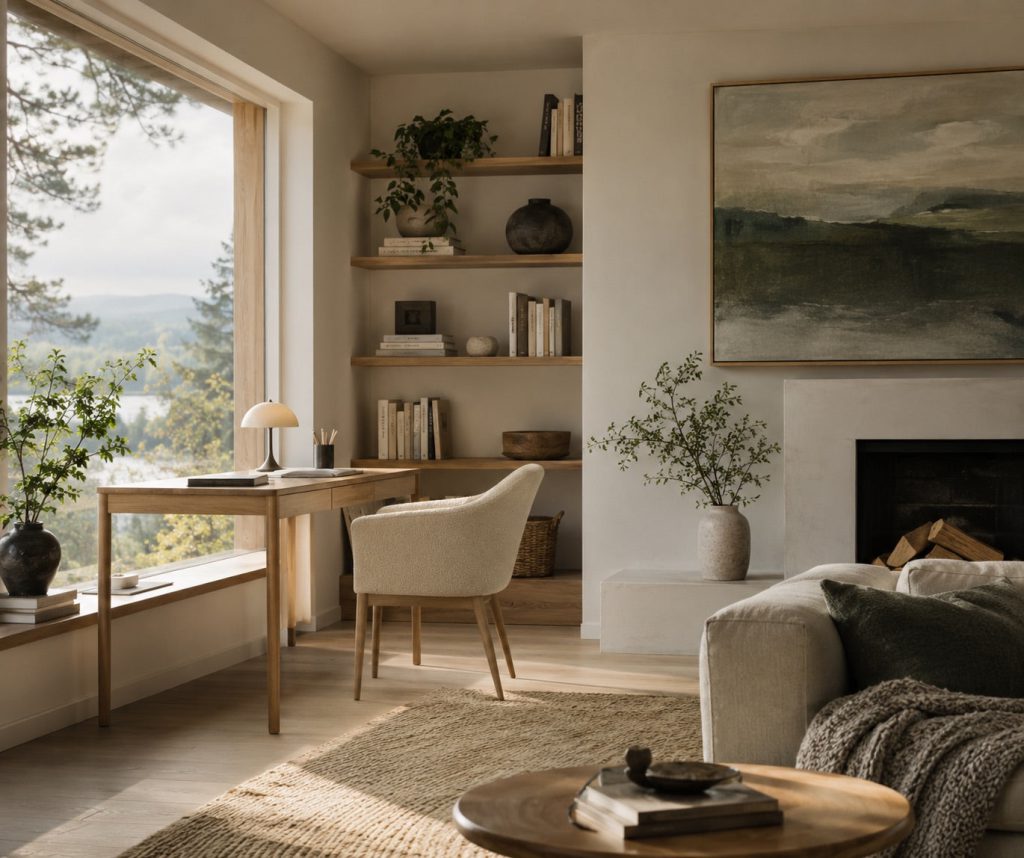
A workspace within a living room has to support concentration and then return some space to everyday life. Start with the tasks you actually do there. The right arrangement for occasional correspondence may be different from one used for long stretches of computer work.
Plan around the working posture
Check the relationship between chair, work surface and equipment using appropriate ergonomic guidance for your needs. Do not choose a desk only because it looks light in the room. Test whether there is enough usable surface for the actual task, and whether the chair can move without blocking the main route. Comfort deserves a place in the plan from the beginning.
Make light and cables visible in the plan
Look for reflections on the screen at the times you work. Position portable lighting within its intended use and keep cables out of circulation routes. A nearby outlet can simplify the setup, but it should not be the only reason for a placement. Follow equipment and electrical guidance rather than improvising connections to suit a photograph.
Create a simple ending ritual
Give the objects you put away a nearby home. A tray or drawer can be useful if it holds the things you genuinely use and remains easy to reach. Leave the desk ready for the next session without requiring a lengthy reset. When the work area shares a room, a small repeatable routine can be more effective than trying to hide every sign of work.
Editorial concept for the Formrest demo. The cover is an AI-generated illustration, not a photograph of a product for sale or a completed client project.