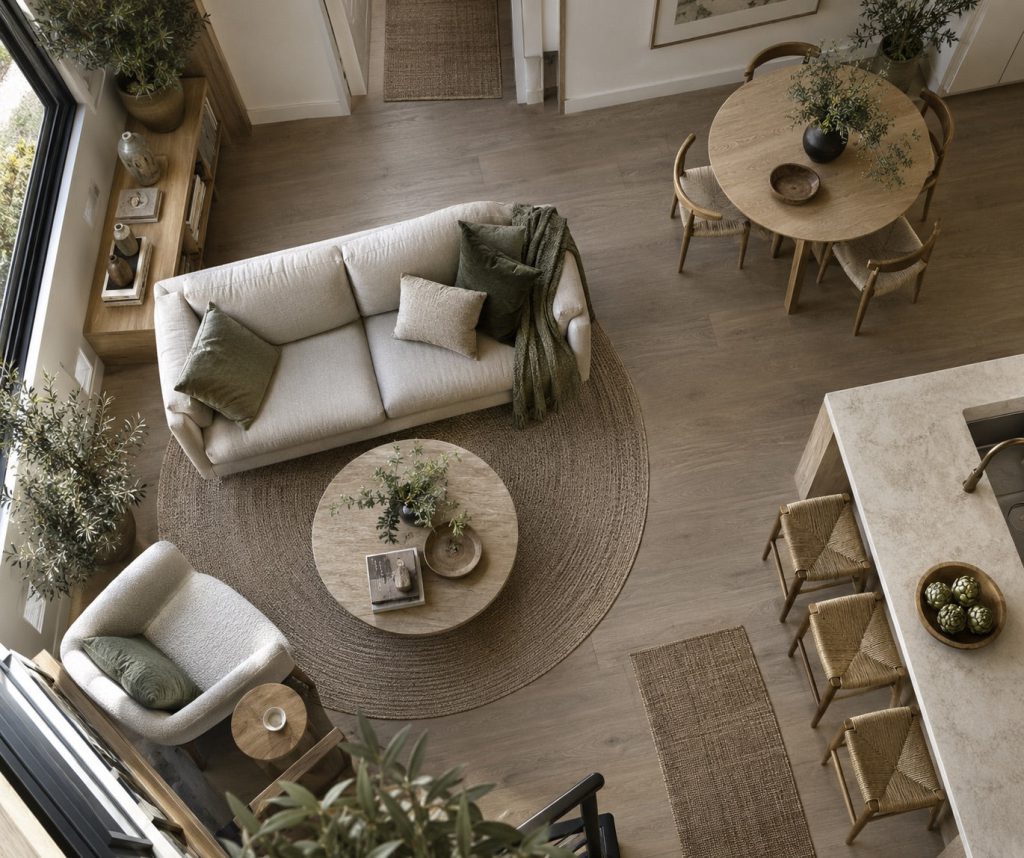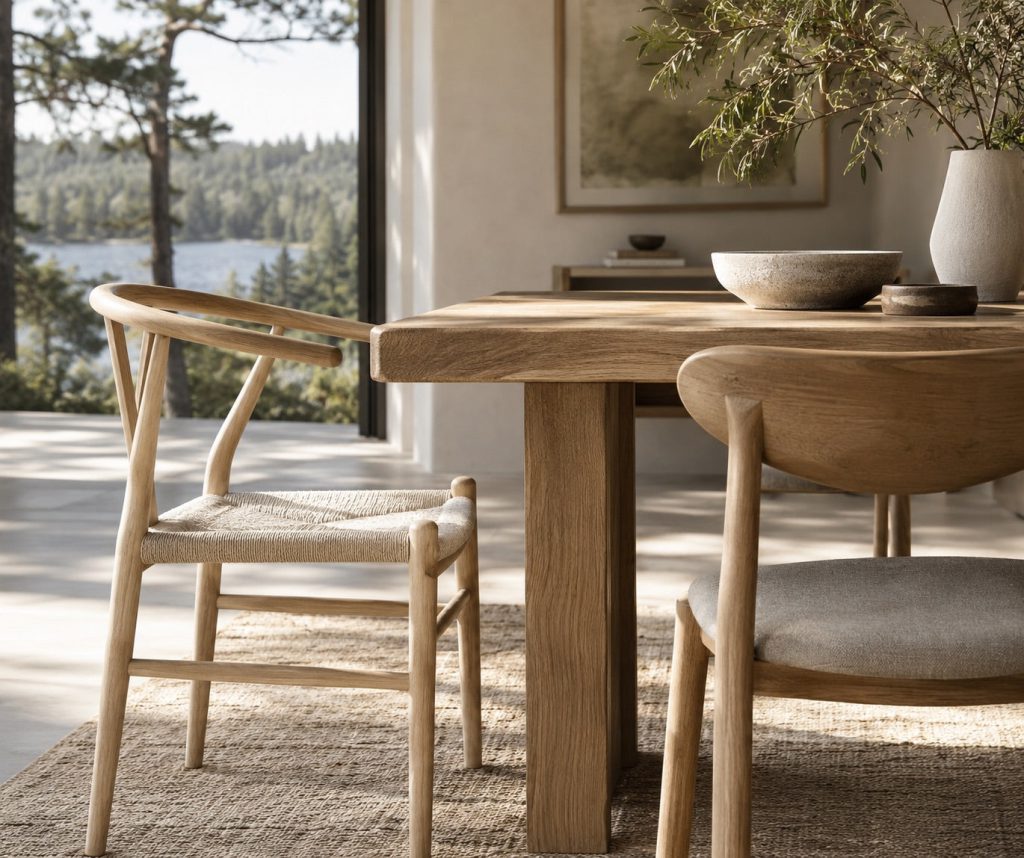
A dining area can feel coherent without every chair being identical. Shared proportions, a similar material tone or a repeated curve can connect different pieces. The practical relationship between chair, table and person should lead the decision.
Check the physical fit
Compare the actual chair and table dimensions, including arms and any structure beneath the tabletop. When possible, sit at the table with the chair rather than assessing them separately. The seat needs to support the person using it, and the chair needs to move comfortably in and out. A visual match cannot compensate for an awkward everyday fit.
Repeat one useful feature
If you mix chairs, choose a relationship you can describe: perhaps a light wood tone, a curved back or a similar visual weight. Let other features vary. Too many unrelated differences can make the arrangement difficult to read, while exact repetition may not be necessary. Try the combination with the table and the floor in view, not just as isolated product images.
Consider the ordinary meal
Think about cleaning, moving and storing the chairs as well as sitting in them. Ask for the care information and construction details of the exact pieces under consideration. If the dining area serves several purposes, test those activities too. A successful mix should make the space more useful and personal, not turn every meal into an exercise in arranging furniture.
Editorial concept for the Formrest demo. The cover is an AI-generated illustration, not a photograph of a product for sale or a completed client project.