An entryway is a place of movement. Bags arrive, shoes come off and keys need somewhere to land. Even a small stretch of wall can support that routine when each object has a clear purpose and the route through the space stays open.
Map the arrival routine
Watch what happens when you come home with your hands full. The place where a bag naturally lands may be telling you more than a styled reference image. Give the most frequently used items the easiest positions. Store less frequent belongings elsewhere so the entry does not become the holding area for every coat and pair of shoes.
Choose storage you can use quickly
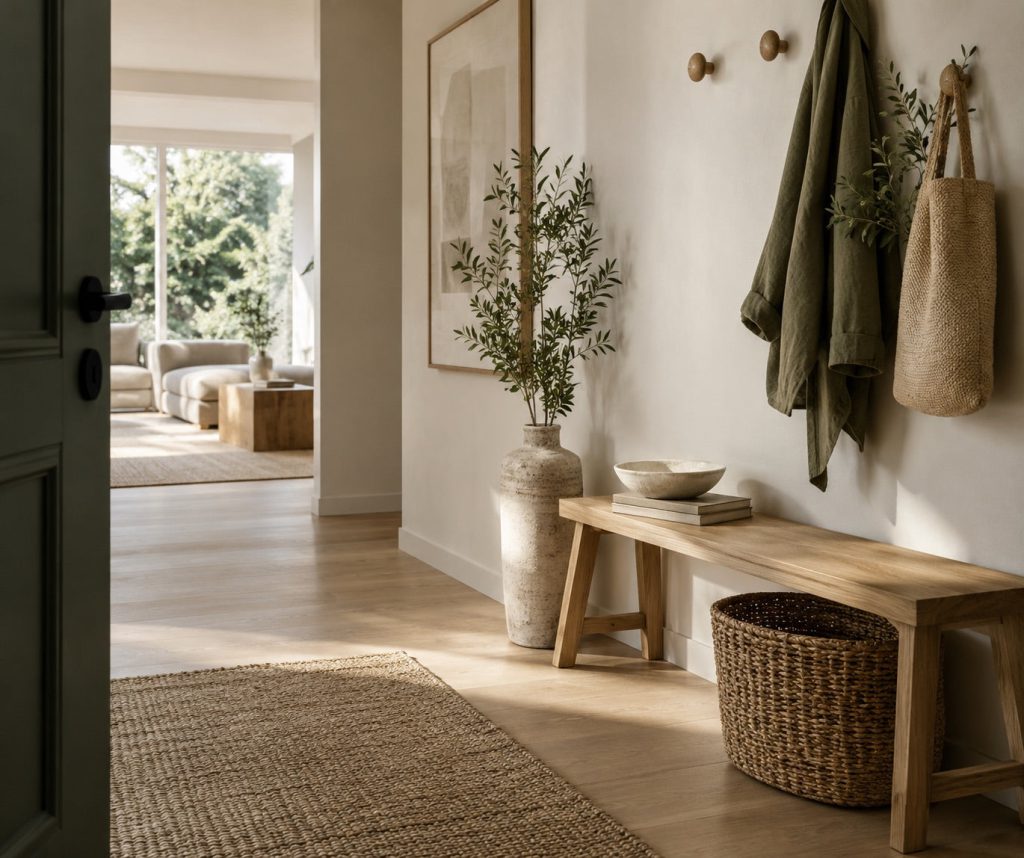
An open basket is useful only if it is easy to reach and its contents remain manageable. A hook is useful only if the person using it can comfortably reach it. Follow the installation and load guidance for any wall-mounted fitting, and check the wall construction rather than guessing from its surface. The best arrangement works for everyone who uses the entrance.
Keep one place to pause
If the space permits, a stable seat can make changing shoes simpler. Check that it does not restrict the door swing or the main route. Keep decorative objects away from that working area. A small bowl for keys can provide a personal detail without making the whole surface unavailable. Review the arrangement after a busy week, when its strengths and problems are easiest to see.
Editorial concept for the Formrest demo. The cover is an AI-generated illustration, not a photograph of a product for sale or a completed client project.