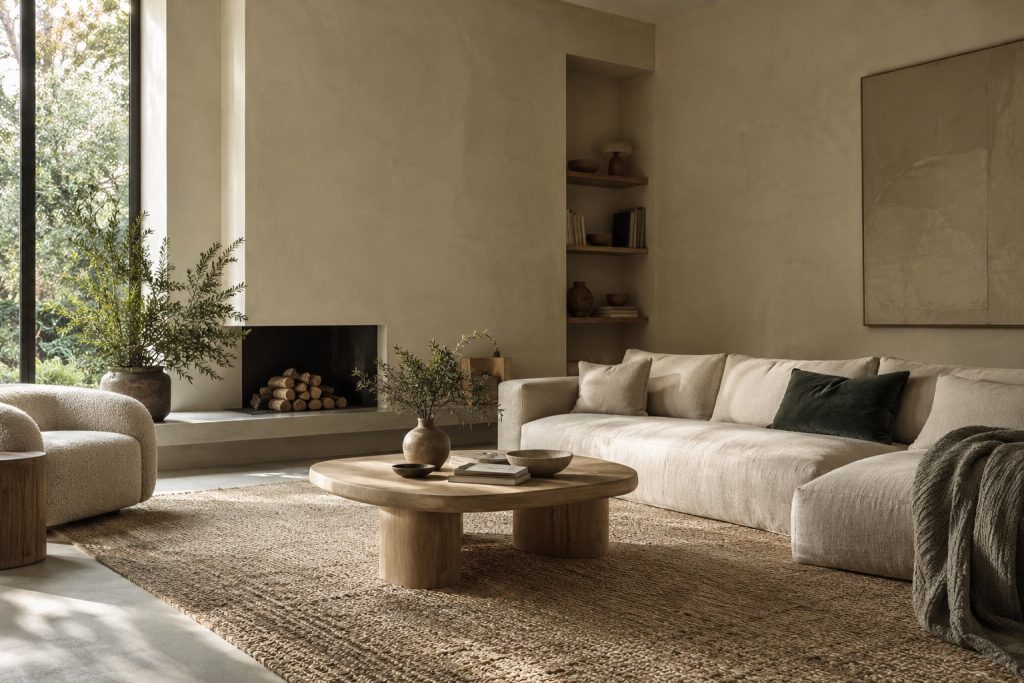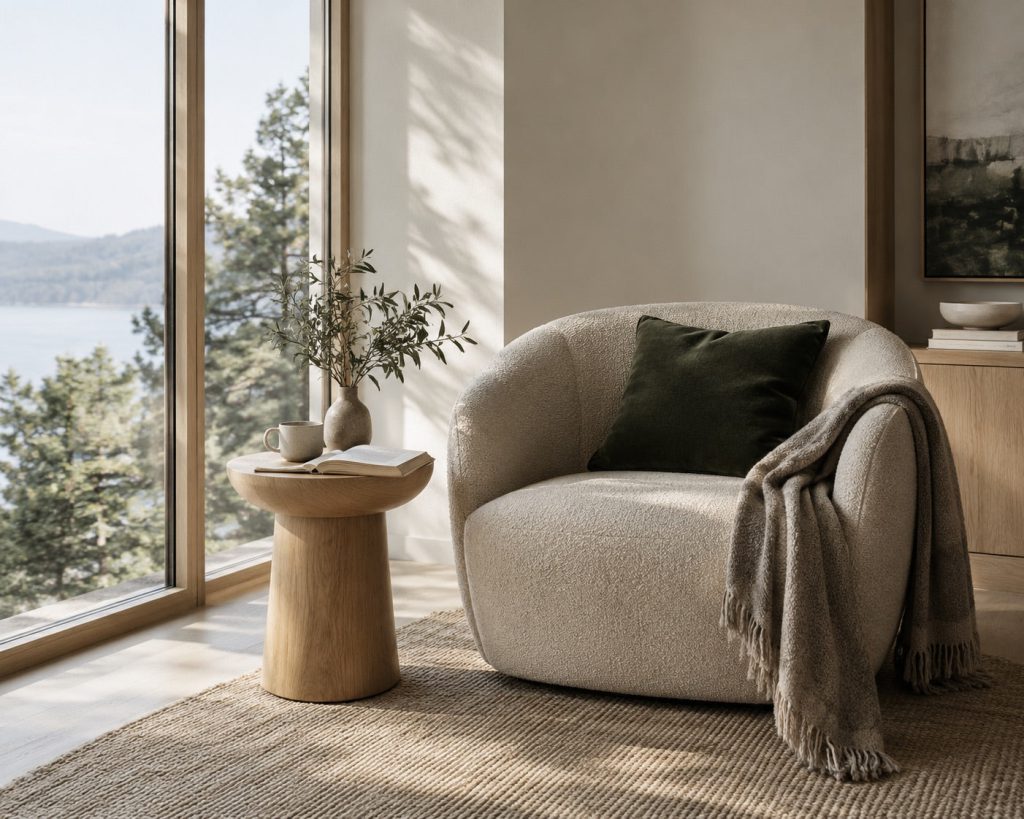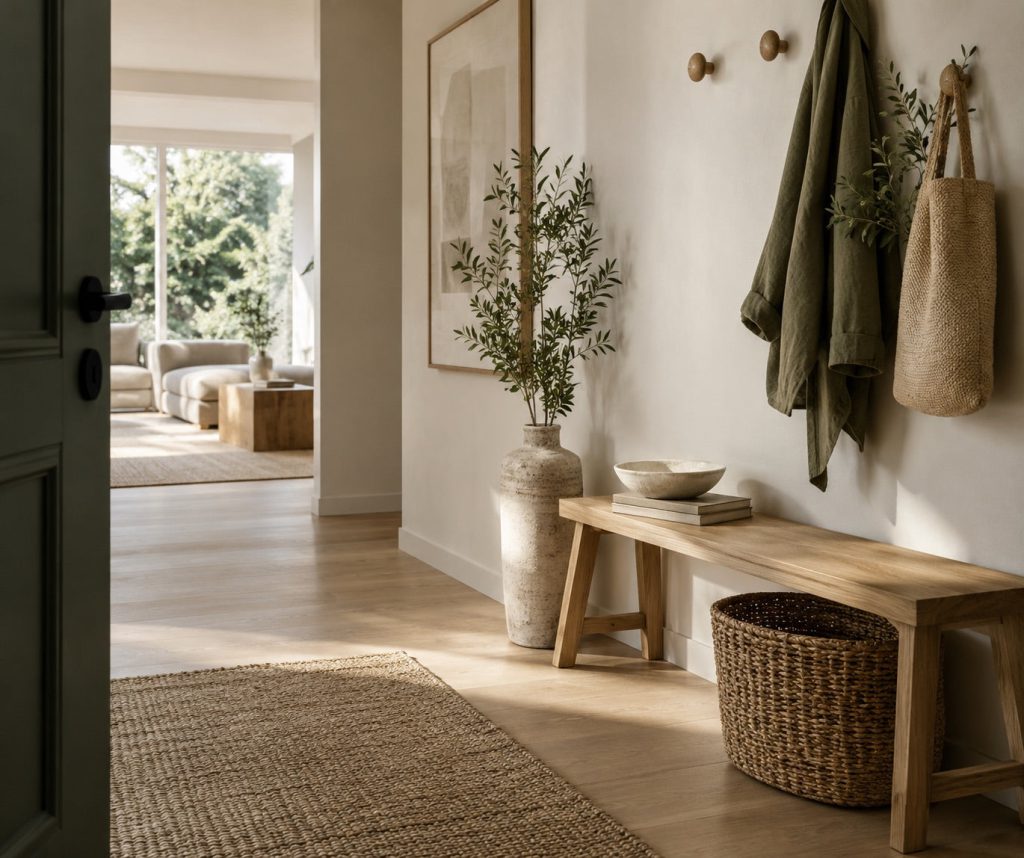
A quiet bedroom can hold color, texture and personal objects. The goal is not to remove every sign of life, but to make the objects around the bed easier to understand. Start with the view you see when you enter and the surfaces you use before sleep.
Give the bed a clear outline
Look at the relationship between the bed, bedding and nearby furniture. If every layer has a strong pattern or a different tone, choose one to lead and let the others become quieter. Folding a throw at the foot of the bed can reveal the bedding beneath without adding another object. Keep the arrangement easy enough to repeat on an ordinary morning.
Edit the bedside surface
Decide what you actually need beside the bed: perhaps a lamp, a book and water. Put less frequent items in a drawer or another location. A small bedside table can feel generous when its top is not doing several unrelated jobs. Before changing furniture, check whether the existing surface becomes more useful with fewer things on it.
Notice the room in different light
Textiles and wall colors can shift noticeably between morning and evening. Look at samples in the room rather than relying only on a screen. Repeat a familiar tone in one or two places, then leave some variation. A bedroom does not need to match perfectly to feel connected; a manageable daily routine matters as much as the palette.
Editorial concept for the Formrest demo. The cover is an AI-generated illustration, not a photograph of a product for sale or a completed client project.