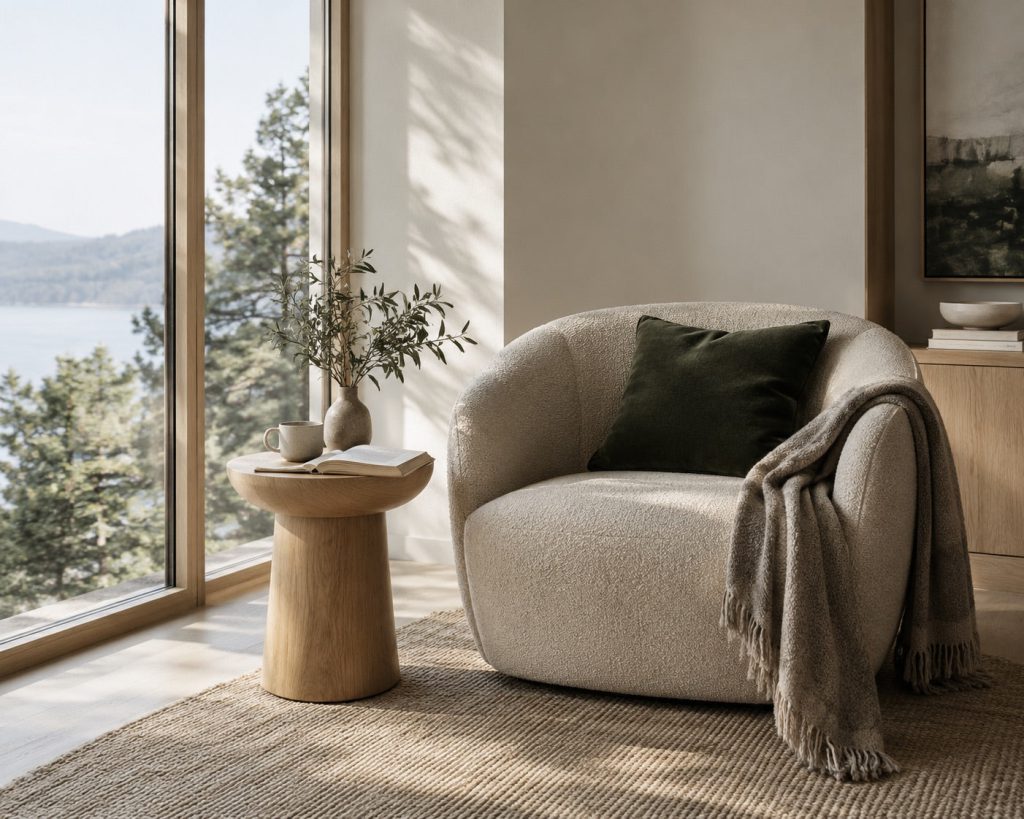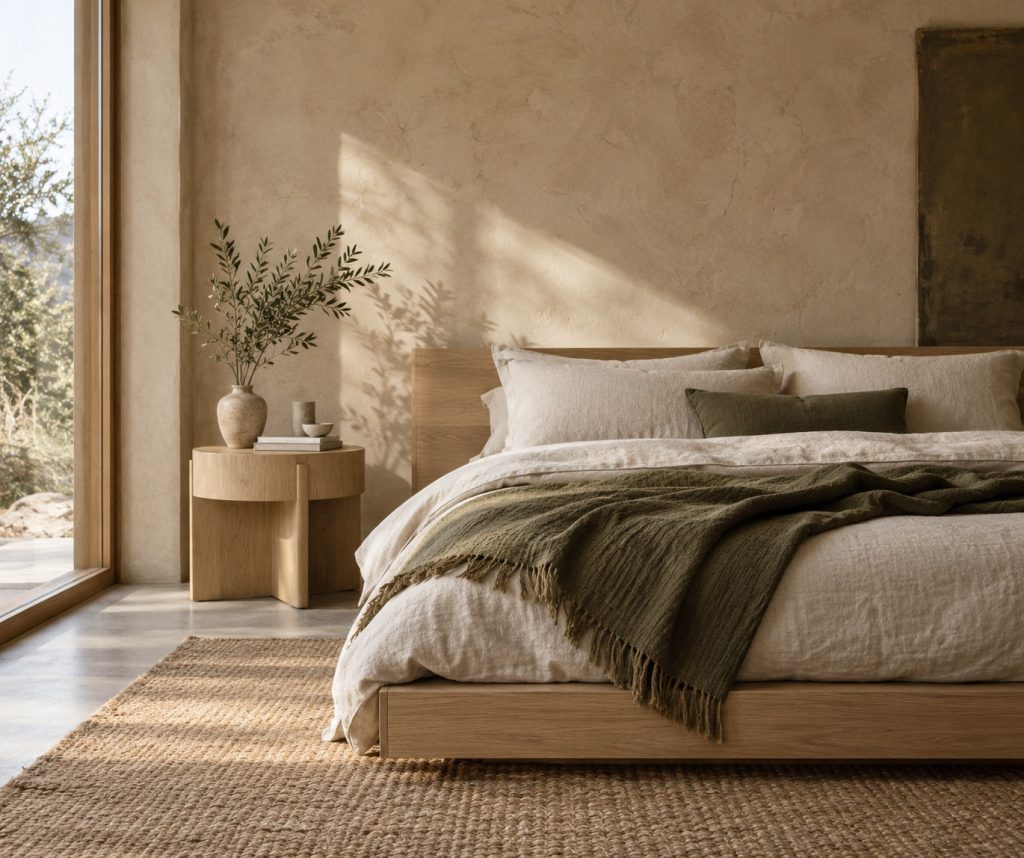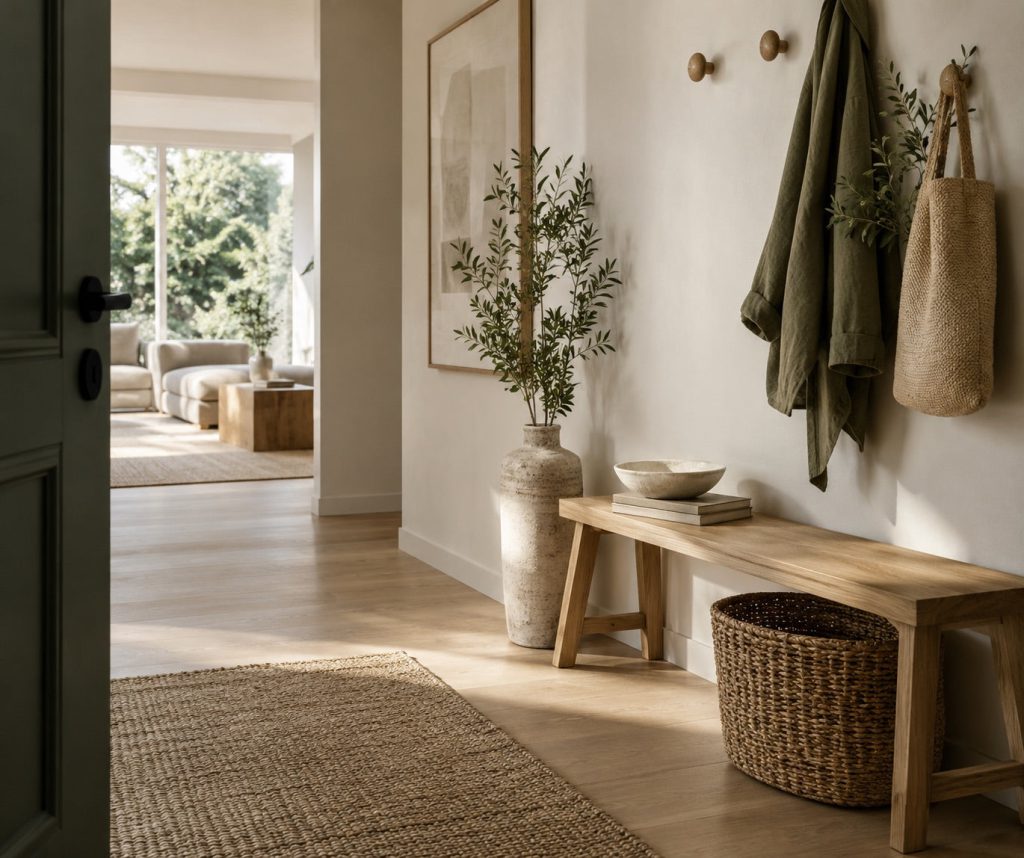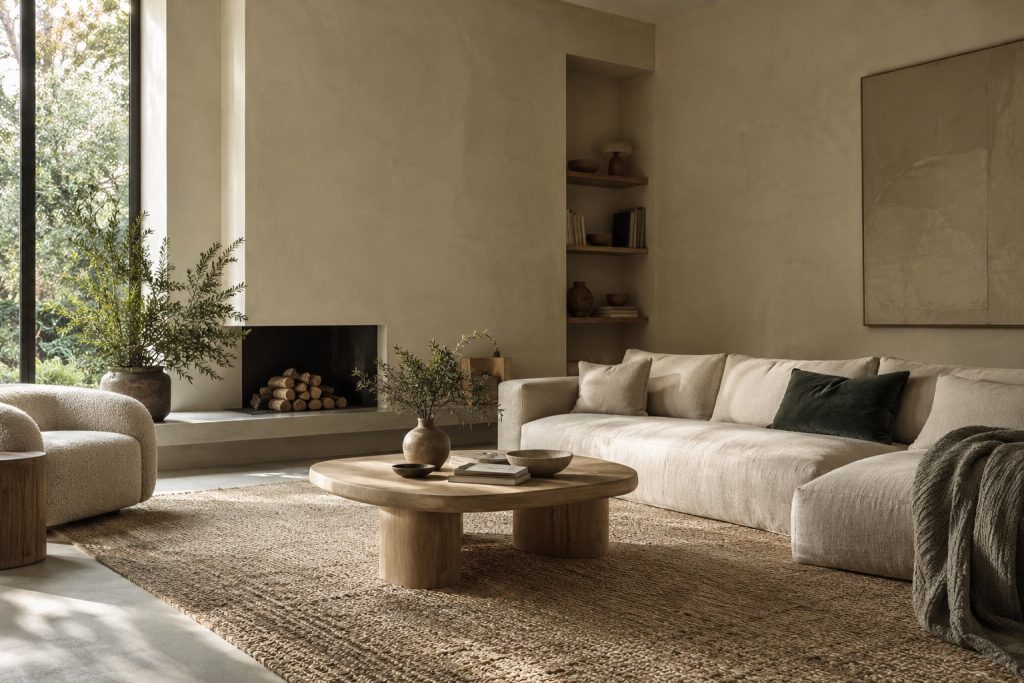
A welcoming living room does not need an object in every corner. Often, the most useful change is to give the things you already enjoy a little more room. Think about where you sit, what you reach for and how you cross the room before deciding what to add.
Begin with the everyday route
Walk from the doorway to the seat you use most. Notice the table corner you avoid, the basket you step around and the lamp cable that interrupts the route. These observations are more useful than a perfect overhead arrangement. Move one loose piece at a time, then live with the change before making another. A room should feel comfortable in motion as well as in a photograph.
Let texture do some of the work
A restrained palette can still have depth. Place a woven cushion beside smoother upholstery or a matte ceramic bowl on a visible wood grain. Keep the color relationship close and let the surfaces provide contrast. There is no need to introduce a new accent color for every object; a repeated tone can connect parts of the room without making them identical.
Leave a surface unfinished
Try clearing part of your coffee table rather than styling the whole top. A book, a drink and an empty patch can be enough. The open area makes the table useful and gives nearby shapes room to register. At the end of the day, notice whether the room is easier to use. That is a better test than whether every angle looks composed.
Editorial concept for the Formrest demo. The cover is an AI-generated illustration, not a photograph of a product for sale or a completed client project.