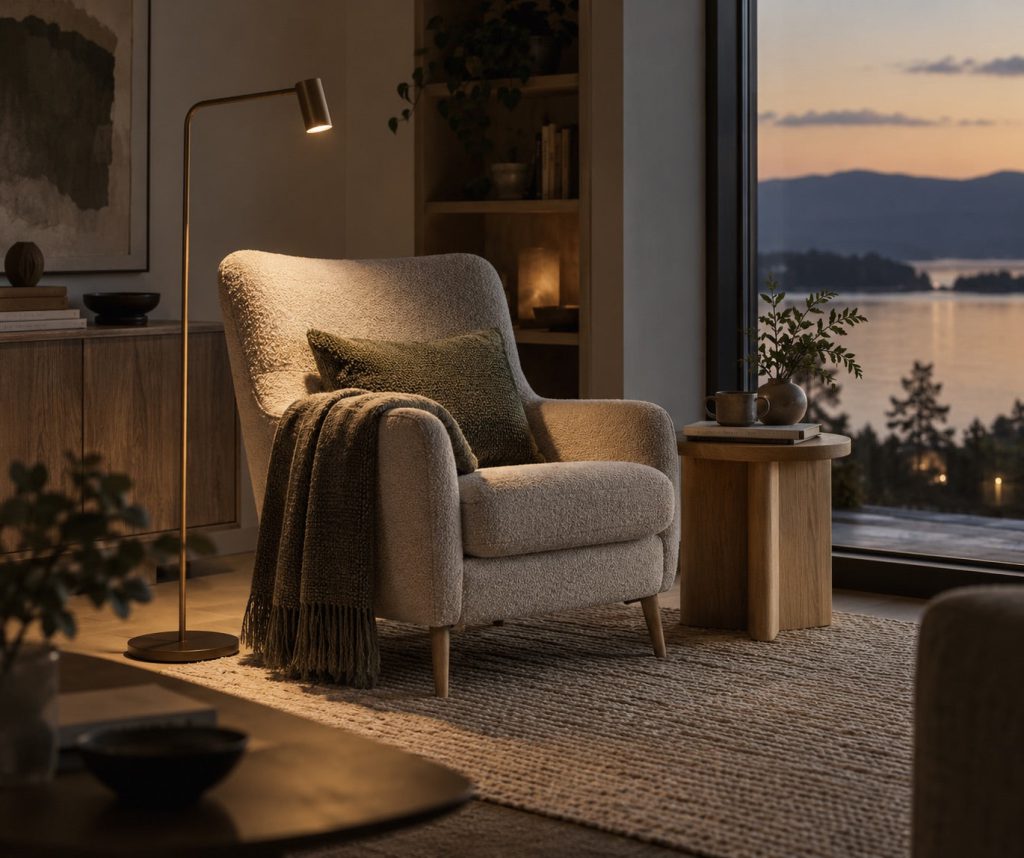
Reading light is personal because the seat, page and reader all change the arrangement. Instead of starting with a particular lamp style, start with the activity. The most useful test is to sit down with the book or device you usually read.
Follow the page
Notice where the light falls and whether your body casts a shadow over the page. Move a portable lamp within the limits of its design and instructions. Try the position from your normal posture rather than leaning toward the light. If a fitting offers adjustment, check that it remains stable and comfortable to operate from the seat.
Watch for reflections
Glossy pages and screens can reflect a light source directly back at the reader. Small changes in position may help, but avoid bending or modifying a fixture beyond its intended range. Check the result in the evening, when reflections can be more obvious. A bright source is not automatically a useful source if it creates distraction or discomfort.
Make the corner easy to use
Place the switch where it is convenient and keep the cable away from the route around the chair. Follow the electrical and bulb guidance supplied with the lamp. The table, seat and light should work as a group, with enough room for the book to move naturally. If you settle into the corner without rearranging everything each time, the setup is doing its job.
Editorial concept for the Formrest demo. The cover is an AI-generated illustration, not a photograph of a product for sale or a completed client project.