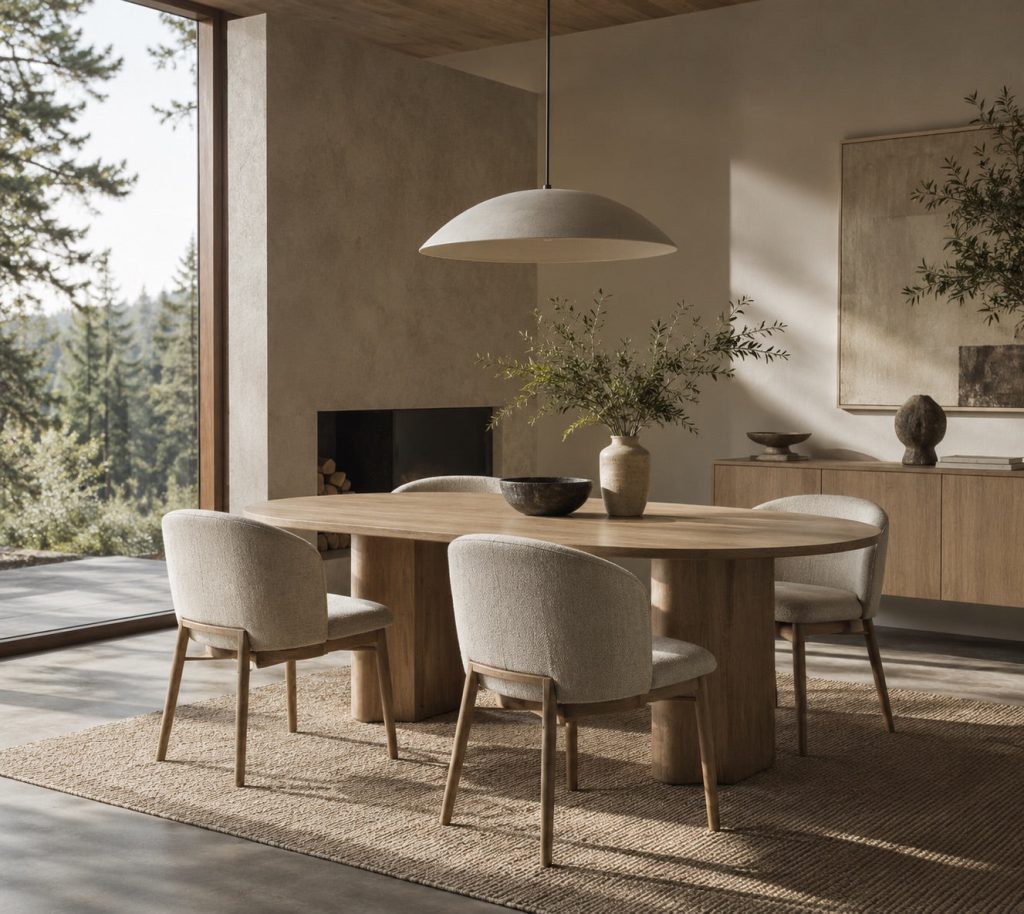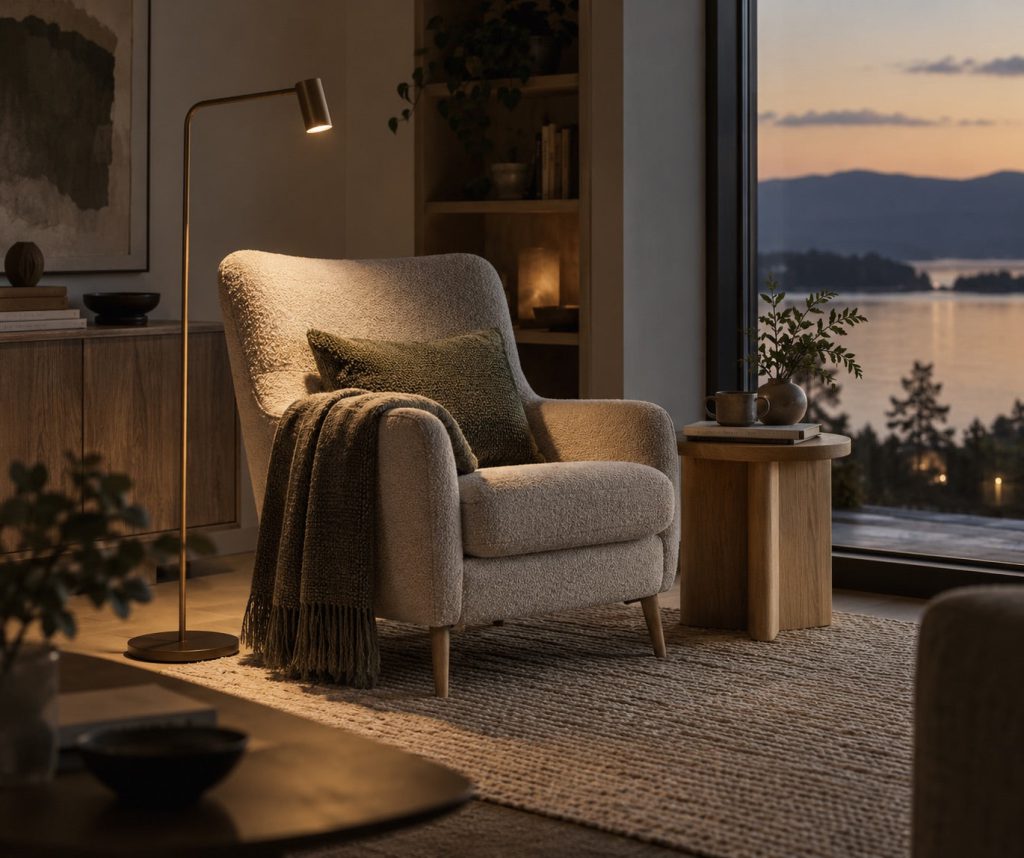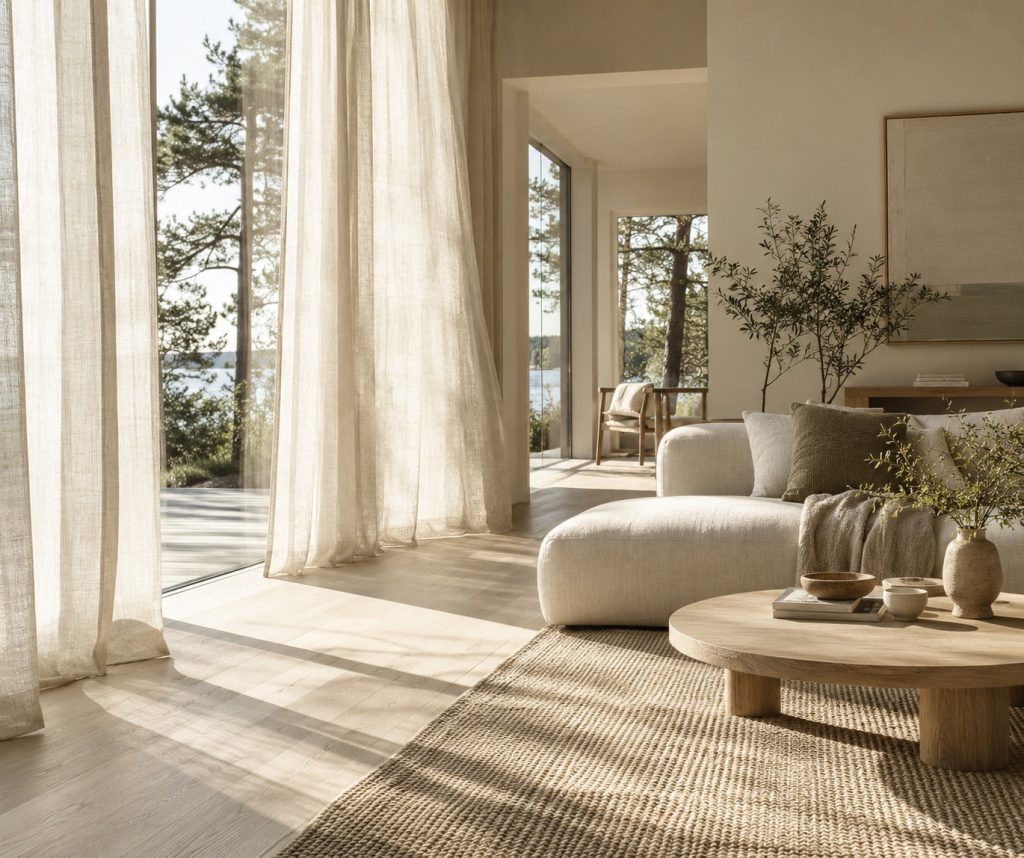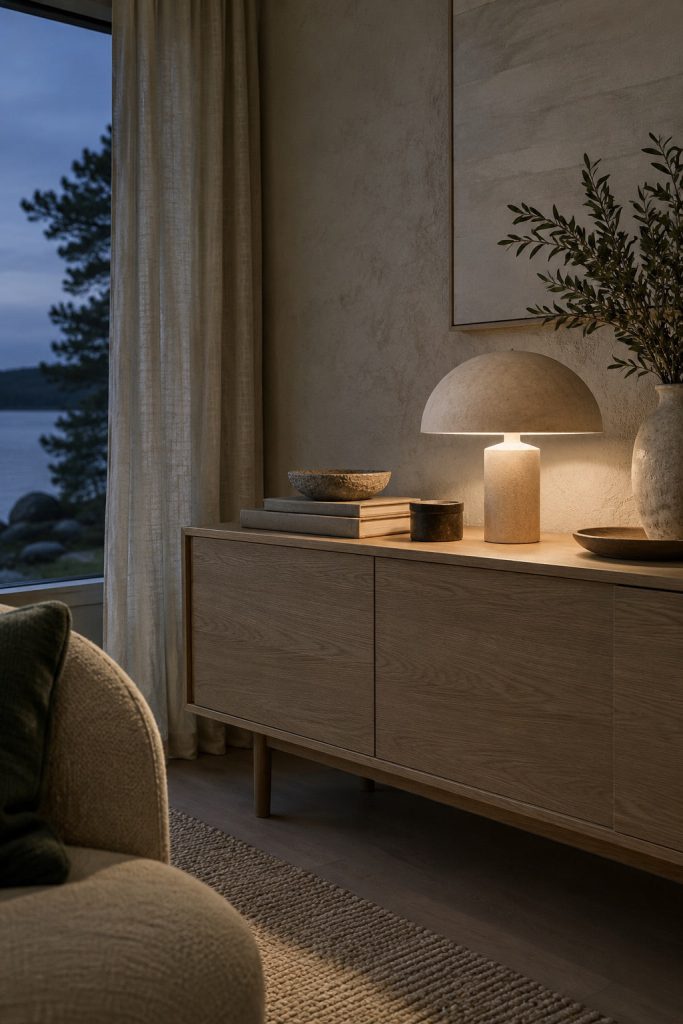
At the end of the day, a room can feel different without moving a single piece of furniture. Smaller sources of light can give familiar corners a new emphasis. Begin with the activities you want to support, then think about the atmosphere between them.
Light the places you use
Identify the seat, table or work surface that needs useful illumination. Add or reposition a suitable lamp for that activity before adding purely decorative light. Look from the position of the person using the space, not only from the doorway. A lamp that looks beautiful across the room may still put a bright source directly in someone’s line of sight.
Leave some contrast
A room does not need the same brightness everywhere. A brighter reading area and a softer background can make the space feel layered. Keep circulation routes clear and adequately lit, especially where there are changes of level. The aim is comfortable contrast, not darkness that makes everyday movement difficult.
Work with the fittings you have
Check the compatibility guidance before changing bulbs or adding dimmers. Follow the fixture’s specifications and use qualified help for electrical work. Try rearranging portable lamps first; this can reveal where a different source would be useful. Judge the result while doing your usual evening activities rather than while standing back to admire the arrangement.
Editorial concept for the Formrest demo. The cover is an AI-generated illustration, not a photograph of a product for sale or a completed client project.